
A menopause metabolism reset is defined as a targeted set of nutrition, exercise, and lifestyle interventions designed to counter the hormonal and body composition changes that shift metabolic function during menopause. Your basal metabolic rate (BMR) does not simply collapse at menopause. Research confirms that metabolic rate stays stable from age 20 to 60, meaning the weight changes you feel are driven by hormonal signaling and muscle loss, not a broken engine. That distinction matters because it points directly to what works. The right strategies, grounded in estrogen receptor alpha (ERα) science and menopause society standards, give you a clear path forward.
What causes metabolism changes in menopause?
The core driver of menopausal metabolic change is the loss of estrogen and its receptor, ERα. ERα regulates fat oxidation in skeletal muscle mitochondria, insulin sensitivity in liver cells, and fat storage in adipose tissue. When estrogen declines, ERα signaling loss reduces fatty acid oxidation and triggers visceral fat inflammation. The result is not a slower metabolism in the traditional sense. It is a reorganized metabolism that stores fat more readily and burns it less efficiently.
This reorganization shows up in three connected ways:
- Mitochondrial inefficiency: Muscle cells produce less energy per unit of fuel, making physical effort feel harder and calorie burn less predictable.
- Visceral fat redistribution: Fat migrates from the hips and thighs to the abdomen, where it drives insulin resistance and low-grade inflammation.
- Muscle mass decline (sarcopenia): Estrogen receptor loss and growth hormone decline accelerate muscle breakdown, and since muscle burns more calories at rest than fat, this shrinks your resting energy expenditure.
Cortisol and thyroid hormones add another layer. Elevated cortisol from chronic stress suppresses the conversion of inactive thyroid hormone T4 into active T3, which further slows cellular metabolism. Sleep disruption, extremely common during menopause, keeps cortisol elevated and compounds the problem.
“Metabolic changes during menopause are adaptations to new hormonal conditions, requiring a shift from restriction to support-focused strategies.” This reframe is the foundation of every effective menopause metabolism reset.
Hormone replacement therapy (HRT) partially restores ERα signaling, improving insulin resistance and metabolic health. It is not a complete reset on its own, and it works best when combined with the lifestyle measures below.
How does nutrition support resetting metabolism after menopause?
Nutrition is the most direct lever you have. The goal is not to eat less. It is to eat in a way that rebuilds muscle, stabilizes blood sugar, and supports thyroid and mitochondrial function.
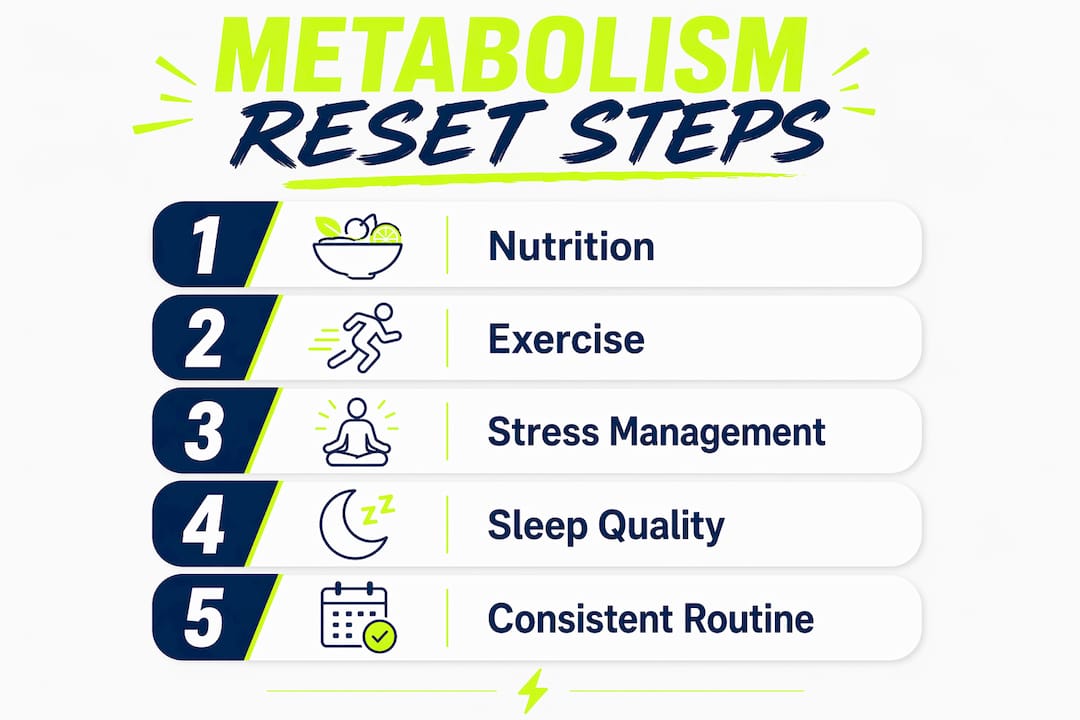
Protein is the first priority. Postmenopausal women need 30–40 grams of protein per meal, or roughly 1.2 grams per kilogram of body weight per day, to counter sarcopenia and support muscle repair. That is meaningfully higher than premenopausal recommendations. High-protein meals also carry a higher thermic effect, meaning your body burns more calories digesting them. A personalized nutrition plan built around these targets makes hitting that number practical rather than guesswork.
Here is a practical daily nutrition framework:
- Anchor every meal with protein. Eggs, Greek yogurt, salmon, chicken, legumes, and cottage cheese all deliver 20–35 grams per serving. Spread intake across three meals rather than loading it at dinner.
- Add prebiotic fiber and fermented foods. Fermented foods and prebiotic fibers support the gut microbiome’s estrobolome, the bacterial community that regulates estrogen metabolism and fat-burning signals. Kimchi, kefir, sauerkraut, oats, and flaxseed all qualify.
- Include healthy fats at each meal. Avocado, olive oil, and fatty fish support hormone production and reduce the inflammation that drives insulin resistance.
- Avoid severe calorie restriction. Strict calorie restriction lowers resting energy expenditure and accelerates muscle loss. Eating too little is one of the fastest ways to make menopausal weight management harder.
- Consider a gentle fasting window. A 12-hour overnight fast (for example, 7 PM to 7 AM) supports insulin sensitivity without stressing the adrenal system the way aggressive intermittent fasting can.
Pro Tip: If you are not sure how much to eat, measuring your Resting Metabolic Rate (RMR) with a device like BodyGem gives you accurate personal data. Standard online calculators are often off by 200–400 calories for postmenopausal women.
What exercise methods effectively reset metabolism during menopause?
Exercise is the second pillar, and the type of exercise matters as much as the amount. The goal is to rebuild lean muscle, restore mitochondrial function, and improve insulin sensitivity without spiking cortisol.

Resistance training is non-negotiable. Resistance training raises lean muscle mass, increasing BMR by approximately 6 calories per pound of muscle gained, and improves insulin sensitivity through GLUT4 upregulation. It also provides an anabolic stimulus that works independently of estrogen signaling, which makes it uniquely valuable after menopause. Aim for 2–3 sessions per week, focusing on compound movements like squats, deadlifts, rows, and presses.
Zone 2 cardio builds your metabolic engine. Zone 2 cardio activates PGC-1α, a protein that promotes mitochondrial biogenesis. This directly addresses the mitochondrial density loss that follows ERα decline. Zone 2 means a pace where you can hold a conversation but feel slightly challenged, typically 60–70% of maximum heart rate. It does not spike cortisol the way high-intensity intervals can.
| Exercise type | Frequency | Primary benefit |
|---|---|---|
| Resistance training | 2–3x per week | Muscle mass, BMR, insulin sensitivity |
| Zone 2 cardio | 3–4x per week | Mitochondrial biogenesis, fat oxidation |
| Post-meal walking | Daily, 10–15 min | Blood sugar regulation |
| HIIT | 1x per week max | Cardiovascular fitness (use cautiously) |
Walking for 10–15 minutes after meals is one of the most underrated menopause weight loss tips available. It drives glucose into muscle cells without requiring a gym. The home fitness guide from Getvitalhome covers how to structure these sessions alongside strength work for maximum metabolic effect.
Pro Tip: Limit high-intensity interval training (HIIT) to once per week during menopause. Chronic high-intensity cardio elevates cortisol, which suppresses T3 conversion and promotes the exact fat storage pattern you are trying to reverse.
How do stress and sleep affect menopause metabolism reset?
Stress management is metabolic medicine. Elevated cortisol suppresses thyroid T3 conversion and promotes muscle catabolism, directly impairing the metabolic rate you are working to rebuild. Sleep disruption, which affects a large proportion of women during menopause, keeps cortisol chronically elevated and worsens insulin resistance. Treating sleep as a metabolic priority, not a luxury, changes outcomes.
Practical daily practices that lower cortisol and protect metabolic health:
- Diaphragmatic breathing: Five minutes of slow, deep belly breathing activates the parasympathetic nervous system and measurably lowers cortisol within minutes.
- Consistent sleep schedule: Going to bed and waking at the same time daily stabilizes cortisol rhythms and improves sleep architecture, even when hot flashes interrupt sleep.
- Manageable exercise loads: Training hard every day without recovery keeps cortisol elevated. Two rest or light-movement days per week are part of the metabolic reset, not a break from it.
- Avoiding extreme calorie deficits: Eating too little is a physiological stressor. It raises cortisol, lowers T3, and triggers the body to protect fat stores while burning muscle instead.
Pro Tip: A magnesium glycinate supplement taken 30–60 minutes before bed supports both sleep quality and cortisol regulation. Many women in menopause are deficient in magnesium, and the gap is easy to close.
Stress and sleep are not soft lifestyle factors. They sit at the center of the cortisol-insulin-fat storage cycle that drives menopausal weight gain. Addressing them with the same seriousness as diet and exercise is what separates a sustainable reset from a temporary fix.
Key Takeaways
A successful menopause metabolism reset requires coordinated resistance training, targeted protein intake, cortisol management, and sleep quality to address the hormonal and body composition changes driving metabolic shifts.
| Point | Details |
|---|---|
| Metabolism is not broken | Metabolic rate stays stable to age 60; hormonal and muscle changes drive weight shifts. |
| Protein intake is higher post-menopause | Aim for 30–40 grams per meal to counter sarcopenia and support muscle repair. |
| Resistance training is the top exercise priority | 2–3 sessions per week rebuild muscle, raise BMR, and improve insulin sensitivity. |
| Cortisol management is metabolic medicine | Chronic stress suppresses T3 and promotes fat storage; sleep and breathing practices are non-negotiable. |
| Calorie restriction backfires | Eating too little lowers resting energy expenditure and accelerates muscle loss. |
What I have learned after years of working with women in menopause
The most common mistake I see is women treating menopause weight gain as a willpower problem. They cut calories harder, add more cardio, and feel worse. The biology does not support that approach. What the research actually shows is that the body has reorganized itself around a new hormonal environment, and fighting that reorganization with restriction makes it worse.
The women who get real results shift their focus from eating less to eating better and lifting more. That reframe sounds simple, but it runs against decades of diet culture messaging. Protein targets feel high at first. Lifting weights feels unfamiliar. But within six to eight weeks, the feedback loop changes. Strength goes up, energy stabilizes, and the scale starts to reflect muscle gain rather than just fat loss.
I also think the cortisol piece is the most underestimated part of the whole picture. Stress is not just a mental health issue during menopause. It is a direct metabolic disruptor. The women who add a consistent stress reduction practice, whether that is breathing work, walking, or simply protecting their sleep, see results that diet and exercise alone do not fully deliver.
The goal is not to fight your body. It is to support it through a real biological transition. That shift in mindset, from restriction to support, is where lasting change begins.
— Ricky
Getvitalhome programs built for menopause metabolic health
Knowing the science is one thing. Having a structured plan that puts it into practice is another.

Getvitalhome’s online personal training programs are built specifically around the metabolic priorities that matter most during menopause: progressive resistance training, Zone 2 cardio, and nutrition coaching that hits your protein targets without calorie restriction. Every program is personalized, so you are not following a generic plan designed for a 25-year-old. The program list includes structured metabolic challenges designed for women at exactly this stage of life. If you want a clear starting point, browse the available programs and find the one that fits where you are right now.
FAQ
What is a menopause metabolism reset?
A menopause metabolism reset is a targeted approach using nutrition, resistance training, and lifestyle changes to counter the hormonal and body composition shifts that alter metabolic function after menopause. It addresses ERα signaling loss, muscle decline, and insulin resistance rather than simply cutting calories.
Does metabolism actually slow down during menopause?
Metabolic rate remains largely stable until age 60. The perceived slowdown comes from muscle mass loss, ERα signaling decline, and hormonal changes that shift how the body stores and burns fat.
How much protein do women need after menopause?
Postmenopausal women need 30–40 grams of high-quality protein per meal, or approximately 1.2 grams per kilogram of body weight per day, to counter sarcopenia and support muscle repair.
What is the best exercise to boost metabolism during menopause?
Resistance training 2–3 times per week is the most effective single exercise strategy. It rebuilds lean muscle, raises BMR by approximately 6 calories per pound of muscle, and improves insulin sensitivity through GLUT4 upregulation.
Can stress really affect weight gain during menopause?
Yes. Elevated cortisol from chronic stress suppresses thyroid T3 conversion and promotes muscle catabolism, directly reducing metabolic rate and increasing fat storage, particularly in the abdomen.