
Exercise is one of the most effective tools for managing depression, yet depression itself makes working out feel nearly impossible. Figuring out how to motivate yourself to workout when depressed is not about willpower. It is about understanding what depression does to your brain and using strategies that work with your biology, not against it. Research from early 2026 confirms that exercise can be as effective as medication for depression and anxiety. The key is starting small, removing barriers, and letting action create motivation rather than waiting for motivation to arrive first.
Why is it so hard to motivate yourself to workout when depressed?
Depression directly disrupts the dopamine system, the brain’s primary reward and motivation circuit. When dopamine signaling is impaired, the brain stops generating the “ready” feeling that normally precedes action. This is not laziness. It is a measurable neurological effect.
The result shows up as a cluster of symptoms that make exercise feel out of reach:
- Low energy and fatigue that make even getting dressed feel exhausting
- Anhedonia, which is the loss of pleasure in activities that once felt rewarding
- Decision fatigue triggered by the chain of micro-steps required to start a workout
- Negative self-talk that frames any attempt as pointless before it begins
The micro-decision problem is more significant than most people realize. Getting to a workout involves choosing when to go, what to wear, what to do, and how long to stay. Each decision costs mental energy. A chain of micro-decisions creates multiple barriers to starting exercise, and depression makes each one feel heavier than it actually is.
The most important reframe is this: motivation is a result of starting, not a prerequisite. Waiting to feel motivated before exercising traps you in an avoidance cycle that depression sustains. The solution is to schedule action first and let the feeling follow.

Pro Tip: Set a rule that you only have to exercise for five minutes. Most people continue past five minutes once they start. If you stop at five, that still counts as a win.
What are the easiest and most effective types of exercise for depression?
Not all exercise is equally effective for depression, and the best type is the one you will actually do. That said, research does point to clear leaders.
Aerobic exercise, including walking, running, cycling, and swimming, consistently shows the strongest evidence for reducing depression and anxiety symptoms. Resistance training and yoga also deliver real benefits, particularly for sleep quality and physical confidence. The evidence favors aerobic work as the entry point, especially for people new to exercising during low mood.
| Exercise type | Depression benefit | Barrier level |
|---|---|---|
| Walking outdoors | High: mood, sleep, circadian rhythm | Very low |
| Running or cycling | High: endorphins, sustained mood lift | Low to moderate |
| Resistance training | Moderate: confidence, energy | Moderate |
| Yoga | Moderate: stress, sleep, body awareness | Low |
| Swimming | High: full body, meditative rhythm | Moderate |
Walking outdoors combines physical activity with daylight exposure, which helps regulate circadian rhythms and improve mood over time. This makes it the single best starting point for most people exercising during low mood. You can do cardio at home when going outside feels like too much.
Group exercise adds another layer. Supervised group sessions improve depression symptoms more effectively than solo workouts because social accountability and professional guidance reinforce consistency. Even a virtual class delivers this effect.
How to build a depression-proof workout routine
A depression-proof routine is built on the smallest possible action that still counts as success. The goal is not performance. It is identity consistency. Showing up, even briefly, keeps you in the habit loop.
Follow these steps to build a routine that holds on your worst days:
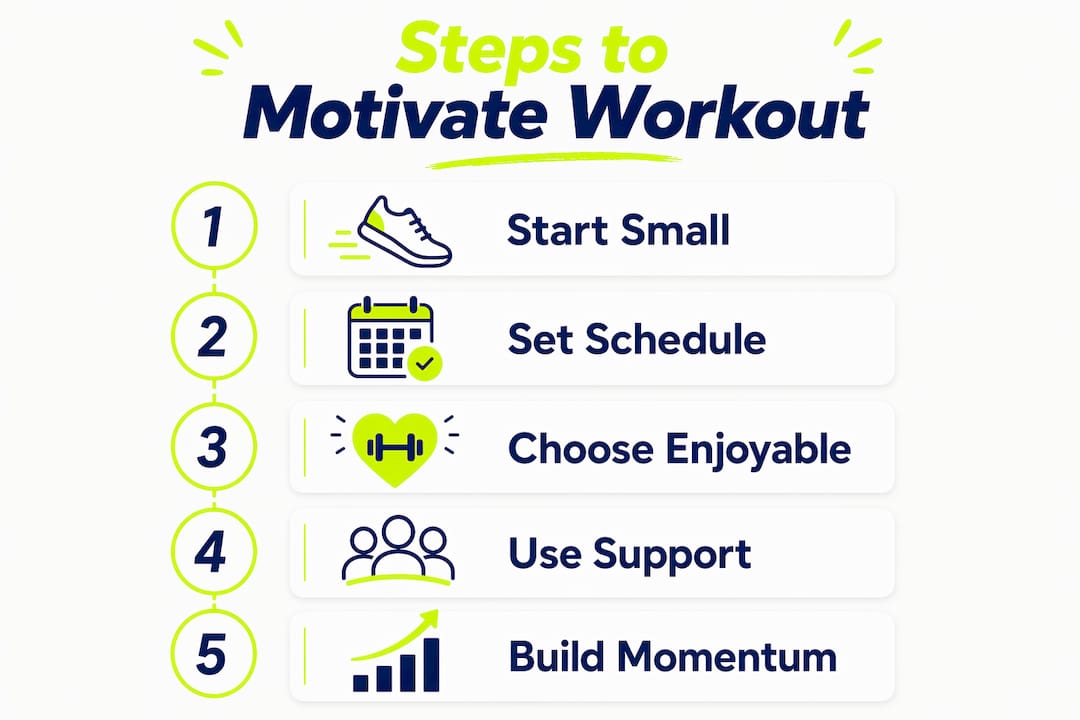
- Start with five to ten minutes. Starting with as little as 5–10 minutes of light activity establishes effective habits even when motivation is absent. This minimum effective dose approach removes the pressure of a full workout.
- Attach the workout to an existing habit. Pair exercise with something you already do, like making coffee or finishing lunch. The existing habit becomes the cue that triggers movement.
- Pre-decide everything the night before. Choose your workout, set out your clothes, and pack any gear. Pre-deciding exercise specifics reduces cognitive load and improves adherence by eliminating morning decisions when energy is lowest.
- Stop while it still feels doable. Ending a workout before exhaustion keeps the experience positive. Positive experiences make it easier to return the next day.
- Add social accountability. Tell a friend, join a group class, or book a session with a trainer. External commitment is more reliable than internal motivation when depression is active.
Pro Tip: Treat your workout like a fixed appointment. Block it in your calendar with a specific time and location. People who schedule workouts like meetings are far more likely to complete them.
Getvitalhome’s structured workout programs are built around exactly this approach, with short, manageable sessions designed to build consistency without overwhelming you.
How to overcome obstacles on low-mood days
Low-mood days are not failures waiting to happen. They are predictable, and you can plan for them in advance.
The most effective tool is “if-then” scripting. Write out a specific plan before a bad day arrives: “If I feel too tired to exercise, then I will walk for ten minutes around the block.” This pre-commitment removes the need to make decisions under stress, which is when depression wins most often.
“Self-compassion in response to missed workouts results in 25% higher program adherence among depressed patients by reducing avoidance and shame. Treating a missed session as information rather than failure keeps you in the program longer.”
Other strategies that work on hard days:
- Lower the bar completely. A five-minute stretch or a slow walk to the mailbox counts. Movement is movement.
- Reward showing up, not performance. The reward should be tied to attempting the workout, not to how well it went.
- Track your sessions visually. A simple calendar with an X on each workout day creates a chain you will not want to break. Seeing progress builds motivation over time.
- Use at-home options. On days when leaving feels impossible, at-home workout videos eliminate the travel barrier entirely.
Self-compassion is not a soft concept. It is a clinical tool. People who respond to setbacks with self-criticism stop exercising. People who respond with self-compassion keep going.
How to maintain motivation and integrate exercise into your depression treatment plan
Consistency matters more than intensity. Ninety minutes of exercise weekly, split into three 30-minute sessions, effectively reduces depression symptoms. That is a realistic, achievable target for most people, even on difficult weeks.
Exercise works best as part of a broader plan, not as a standalone fix. Exercise should complement therapy, medication, sleep hygiene, and nutrition rather than replace any of them. Each element reinforces the others.
Key habits that sustain long-term exercise motivation:
- Aim for 3–5 sessions per week at a consistent time of day
- Join a virtual or in-person group class for social accountability
- Schedule regular check-ins with a trainer or coach to adjust your plan
- Track mood alongside workouts to see the connection between movement and how you feel
- Revisit your “why” regularly, whether that is better sleep, more energy, or reduced anxiety
Supervised group exercise programs serve as evidence-based clinical tools for people hesitant about medication or facing therapy delays. They are not a consolation prize. They are a legitimate treatment option. Getvitalhome’s virtual fitness classes provide exactly this kind of structured, socially supported environment from home.
Key Takeaways
Motivating yourself to work out when depressed requires removing barriers, starting small, and letting action build momentum rather than waiting for motivation to appear.
| Point | Details |
|---|---|
| Action creates motivation | Start moving first; the motivation to continue follows from action, not the other way around. |
| Minimum effective dose | Five to ten minutes of light activity is enough to establish a habit and break the avoidance cycle. |
| Pre-decide everything | Lay out clothes and plan your workout the night before to eliminate morning decision fatigue. |
| Self-compassion drives adherence | Responding to missed sessions with self-compassion keeps you in the program 25% longer than self-criticism does. |
| Exercise complements treatment | Combine regular movement with sleep, nutrition, therapy, and professional support for the best results. |
What I’ve learned about motivation and depression after years in fitness
People come to me convinced they lack willpower. That is almost never the real problem. The real problem is that they are waiting to feel ready before they act, and depression makes “ready” feel permanently out of reach.
The most useful shift I have seen is when someone stops asking “Do I feel like working out?” and starts asking “Can I do five minutes?” The answer to the second question is almost always yes. That five minutes is not a warmup. It is the whole point. Showing up when you feel terrible is the skill. Everything else builds from there.
The other misconception I see constantly is that motivation is a personality trait. Some people have it and others do not. That is false. Motivation is a skill built through repetition and structure. The people who exercise consistently during depression are not more motivated. They have better systems. They pre-plan, they lower the bar on hard days, and they do not treat a missed session as a reason to quit.
Patience is not optional here. Depression does not lift in a week, and neither does a fitness habit. Give yourself a full month of consistent small efforts before judging whether it is working. The evidence says it will.
— Ricky
Getvitalhome is here to support your fitness and mental health
Getting started is the hardest part, and you do not have to figure it out alone.

Getvitalhome offers online personal training designed specifically for people who need structure, accountability, and a plan that adapts to how they feel each day. Our coaches understand that some days the goal is simply showing up, and they build programs around that reality. Virtual sessions mean no commute, no gym anxiety, and no excuses to skip. Whether you want one-on-one coaching or the social energy of a group class, Getvitalhome has a format that fits your life. Book a session and take the first step toward building a routine that actually sticks.
FAQ
What is the minimum exercise needed to help with depression?
Ninety minutes of exercise per week, split into three 30-minute sessions, effectively reduces depression symptoms. Starting with as little as five to ten minutes daily is enough to begin building the habit.
What type of exercise is best for depression?
Aerobic activities like walking, running, cycling, and swimming show the strongest evidence for reducing depression symptoms. Resistance training and yoga also help, particularly for sleep and self-confidence.
How do I start exercising when I have no energy?
Start with the smallest possible action, such as a five-minute walk or a short stretch at home. Motivation follows action, so beginning the movement, even briefly, is more effective than waiting to feel energized first.
Does exercising outdoors help more than indoor workouts?
Outdoor walking adds the benefit of daylight exposure, which helps regulate circadian rhythms and supports mood regulation beyond what indoor exercise alone provides. Both options are effective, and combining them is ideal.
What should I do when I miss a workout due to depression?
Respond with self-compassion rather than self-criticism. Self-compassion leads to 25% higher adherence in depressed patients by reducing the shame that drives avoidance. Treat the missed session as one data point and return the next day.